11 hr
Nagoya Day Trip: Gujo, Takayama & Shirakawa-go Heritage Villages
- Expert local guide
- Small group
- Skip-the-line access
- Free cancellation
Shirakawago Private Tour From Nagoya — Gassho Villages & Hida Highlands
Thatch steepens against the Shogawa, snow-country silence holds
Compare fares, pick the fit — all bookings are mobile-voucher and eligible for free cancellation where shown.
11 hr
10 hr
4 hr
Planning a shirakawago private tour from nagoya requires understanding that village entry is free, while individual historical sites and facilities charge nominal fees. Travelers often pair this UNESCO heritage destination with nearby Takayama to fully experience the traditional gassho-zukuri architecture.
|
Top pick General Access Self-Guided Village Walk |
Facility Access Individual Site Fees | |
|---|---|---|
| Entrance Fee | 0 JPY | 300-800 JPY |
| Operating Hours | 08:00–17:00 | 08:00–17:00 |
| Access Method | Walking | Walking / Shuttle Bus |
| Best Arrival Window | 08:00–10:00 | 08:00–10:00 |
| Primary Activity | Village sightseeing | Museums and farmhouses |
| Best for | First-time visitors | Deep cultural exploration |
| See tickets & prices |
Verdict: For a smooth shirakawago private tour from nagoya, focus on the free general access for photography and architecture, supplementing with facility tickets only if you wish to enter specific historic farmhouses.
Worth it for time-poor travellers, skippable for independents
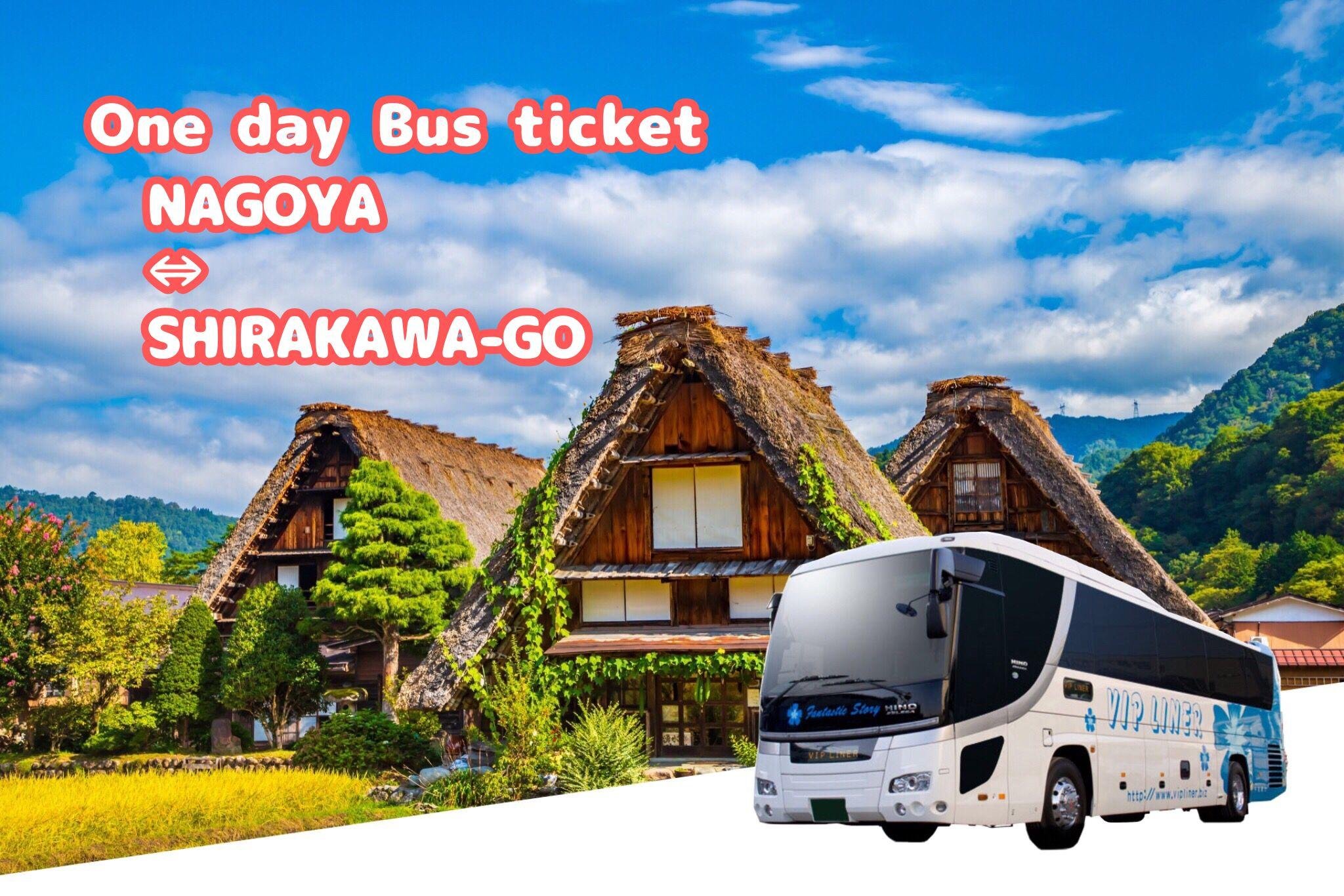
A shirakawago private tour from nagoya buys you one thing above all: a driver who covers roughly 300km of mountain road in a day so you don't spend it decoding bus timetables. The village itself charges 0 JPY to enter — the money is transport, not access. Individual gassho-zukuri farmhouses like the ones on the Ogimachi loop charge 300-800 JPY on top, and those are usually paid on the day. Options on this page range from a bus pass to full-day guided runs that pair the UNESCO village with Hida-Takayama's old merchant streets, and one that adds Gujo. That structure pays off for anyone with two or three days in central Japan. Independent travellers comfortable with a 08:00 departure and a highway bus can replicate most of it with the pass alone, cheaper.
Bottom line: If your Japan itinerary is tight, a shirakawago private tour from nagoya earns its price in logistics alone — if you have the days and the patience, take the bus pass instead.
They offer different levels of flexibility; most visitors who value a personalized pace find the shirakawago private tour from nagoya more rewarding than crowded group alternatives.
|
Top pick Private Tour |
Group Bus Tour | |
|---|---|---|
| Customization | Fully tailored itinerary | |
| Travel Mode | Private vehicle | |
| Departure | Hotel pick-up | |
| Group Size | Private group | |
| Duration | Full-day (flexible) | |
| Price Level | Premium | |
| See tickets & prices |
Verdict: For those seeking deep exploration and convenience, the shirakawago private tour from nagoya provides a superior, stress-free way to experience these iconic landmarks.
Hand-picked experiences loved by thousands of travelers
10 hours
Free Cancellation
Explore UNESCO thatched villages and Edo-era streets in Japan's scenic mountain heartland
10 hours
Free Cancellation
Discover UNESCO heritage thatched villages and Edo-era streets in Japan's mountain heartland
9 hours to 1 day
Free Cancellation
Journey to the Japanese Alps to explore thatched-roof Gassho farmhouses and Edo-era streets
9.5 hours
Free Cancellation
Discover two UNESCO heritage sites in Japan's Alps on a guided countryside excursion with transport included
9 hours
Free Cancellation
Explore preserved merchant streets and a UNESCO mountain village with a licensed guide and private car
10 hours
Free Cancellation
Discover UNESCO heritage villages and Edo-period streets on a full-day private excursion through Gifu's mountains.
10 hours
Free Cancellation
Exclusive 10-hour journey to UNESCO-listed village with traditional gassho-zukuri farmhouses
You leave Nagoya early, because shirakawago private tour from nagoya tours that depart at dawn deliver you inside the recommended 08:00–10:00 arrival window, before the tour-bus fleet fills the lots. The expressway climbs, tunnels through the Ryohaku range, and drops you at Ogimachi with the valley still cool.
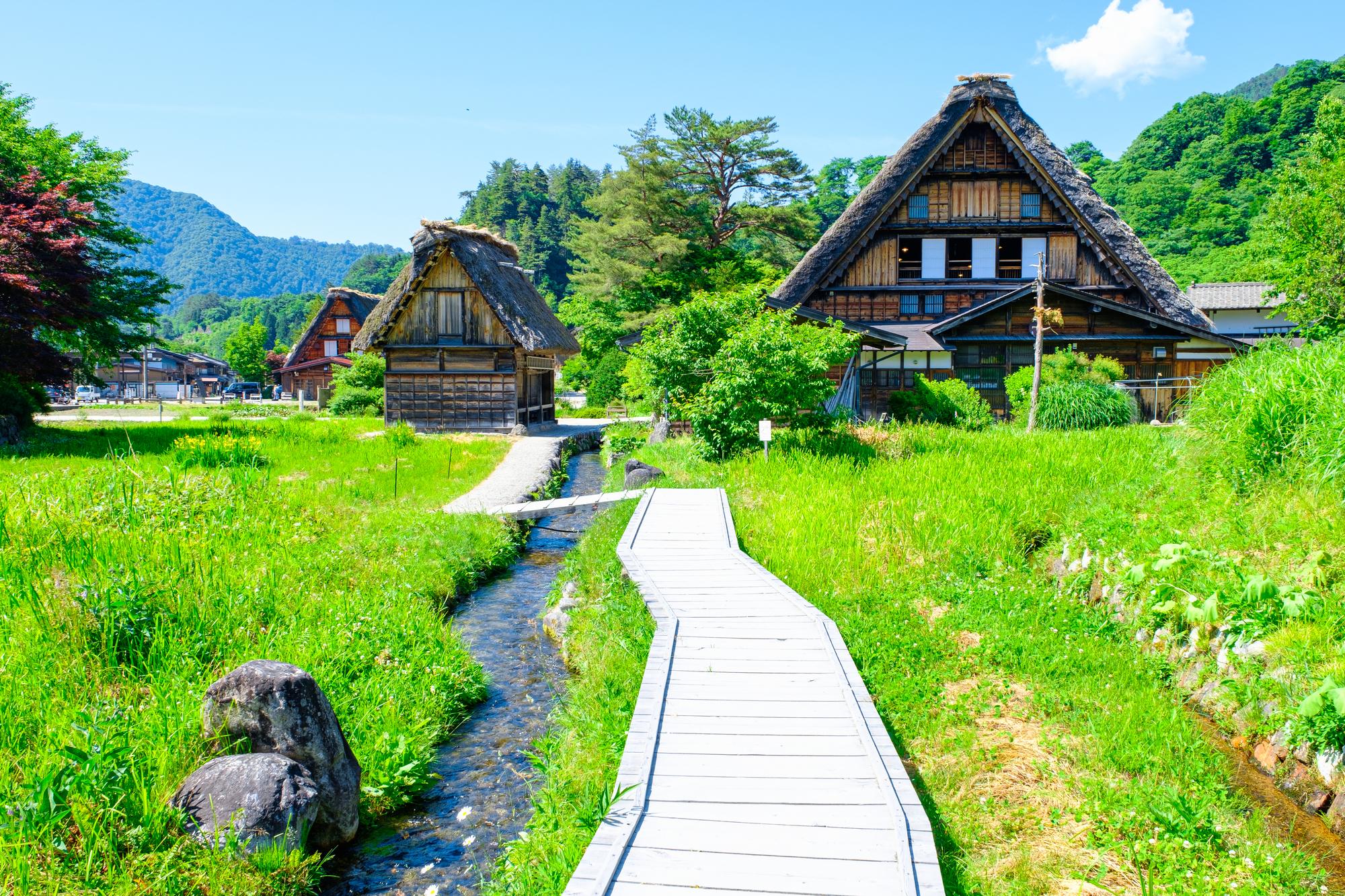
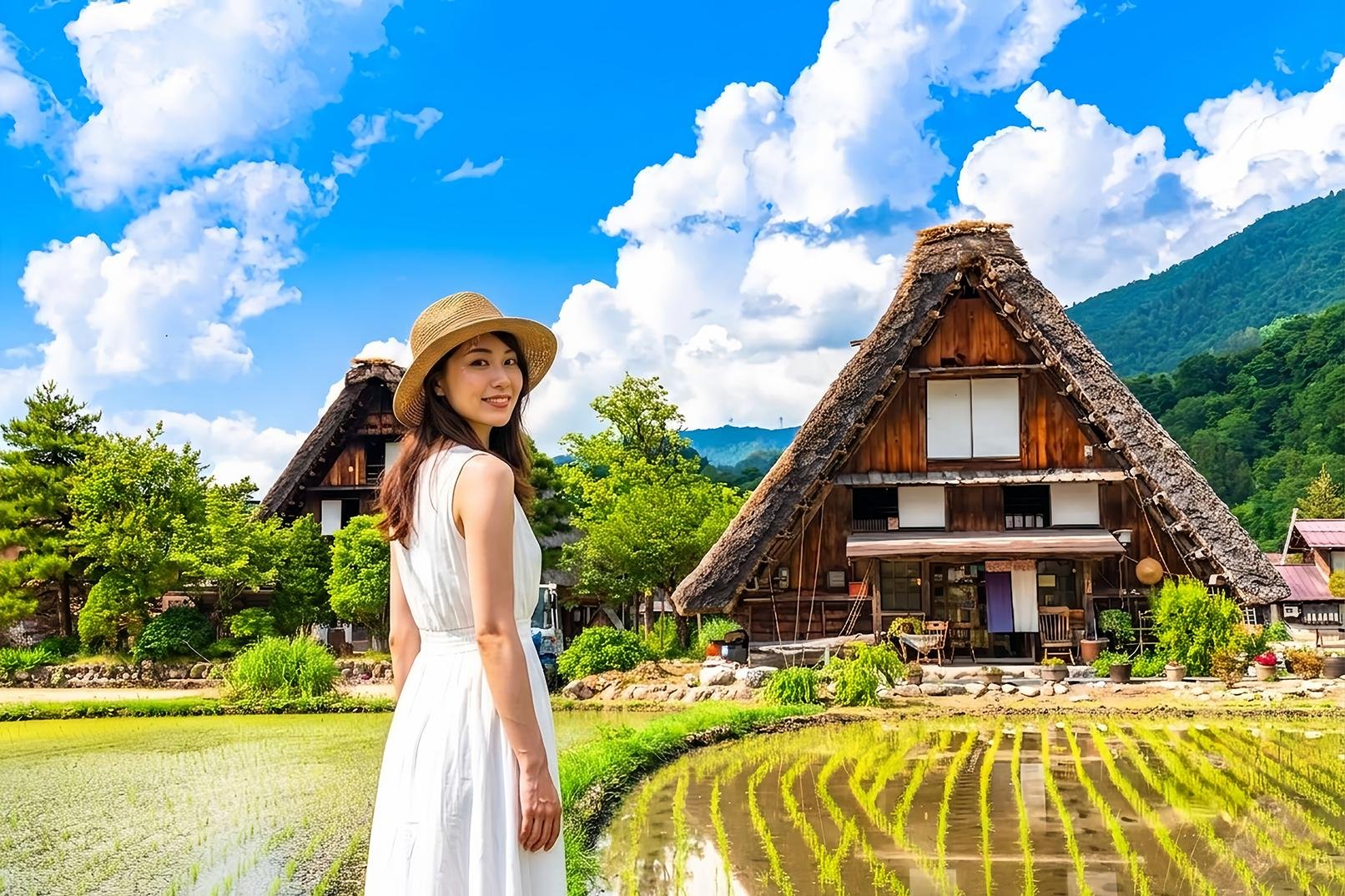
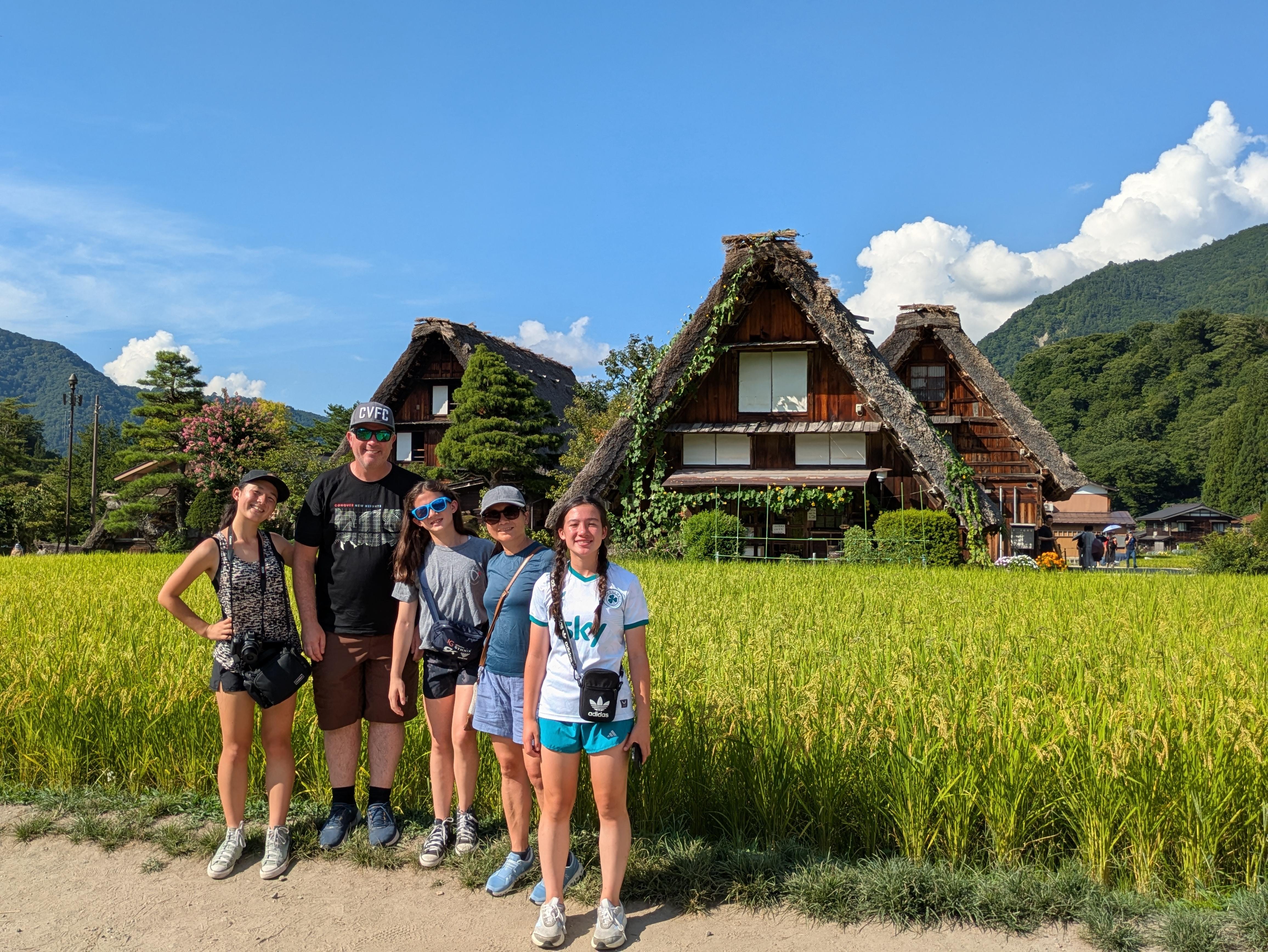
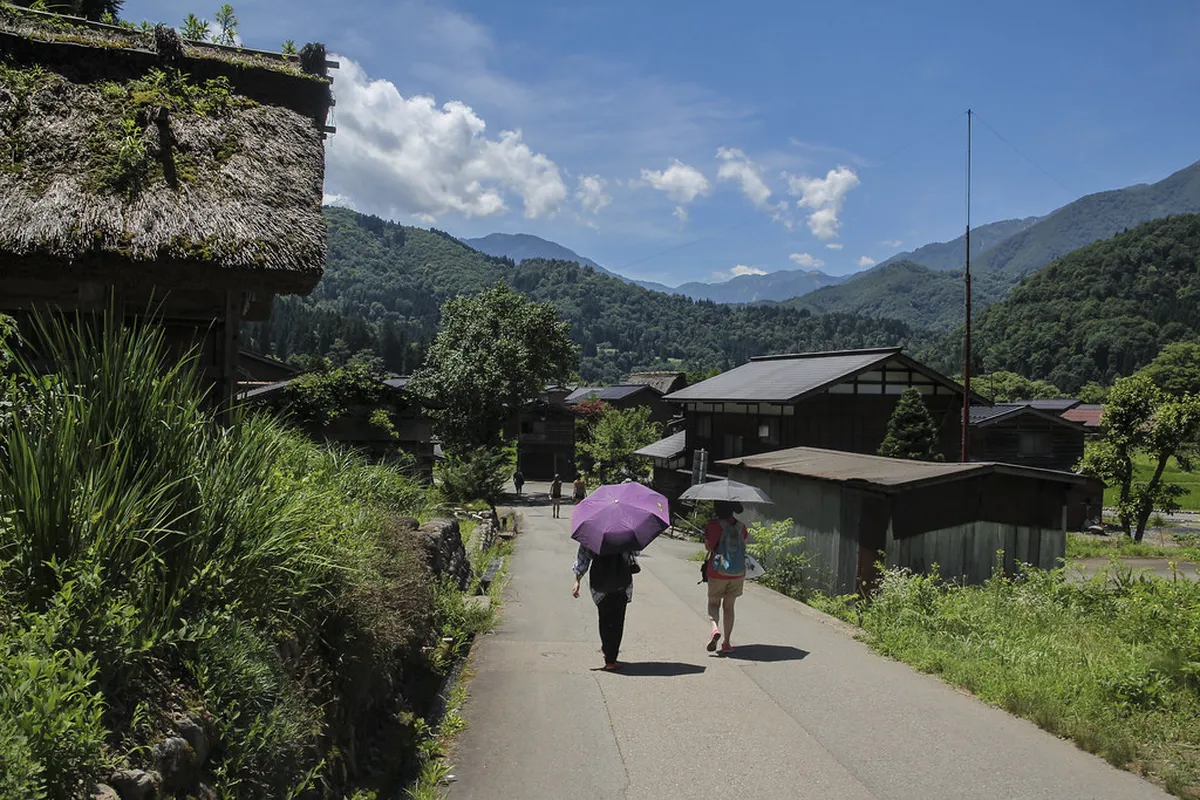
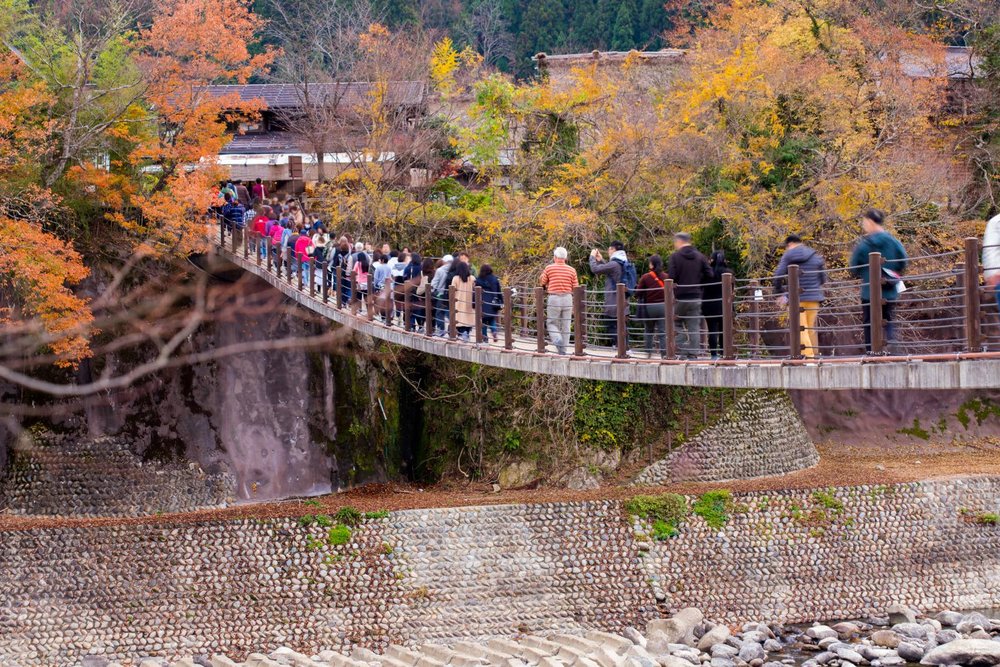
Cross the Deai Bridge on foot — the suspension deck sways slightly, and the Shogawa runs green and fast beneath it. You enter the village free of charge, then pay 300-800 JPY at whichever house you choose to go inside. At the Wada House you leave your shoes at the step, climb a ladder-steep staircase to the second and third floors, and stand among the blackened beams where silkworm trays once sat. The thatch above you is nearly a metre thick.
You walk the lanes for two hours. Ducks in the irrigation channels. Rice paddies squared off between farmhouses. A woman sweeping a stone step. By late morning coaches arrive in numbers, and the quiet you had at 08:30 thins out.
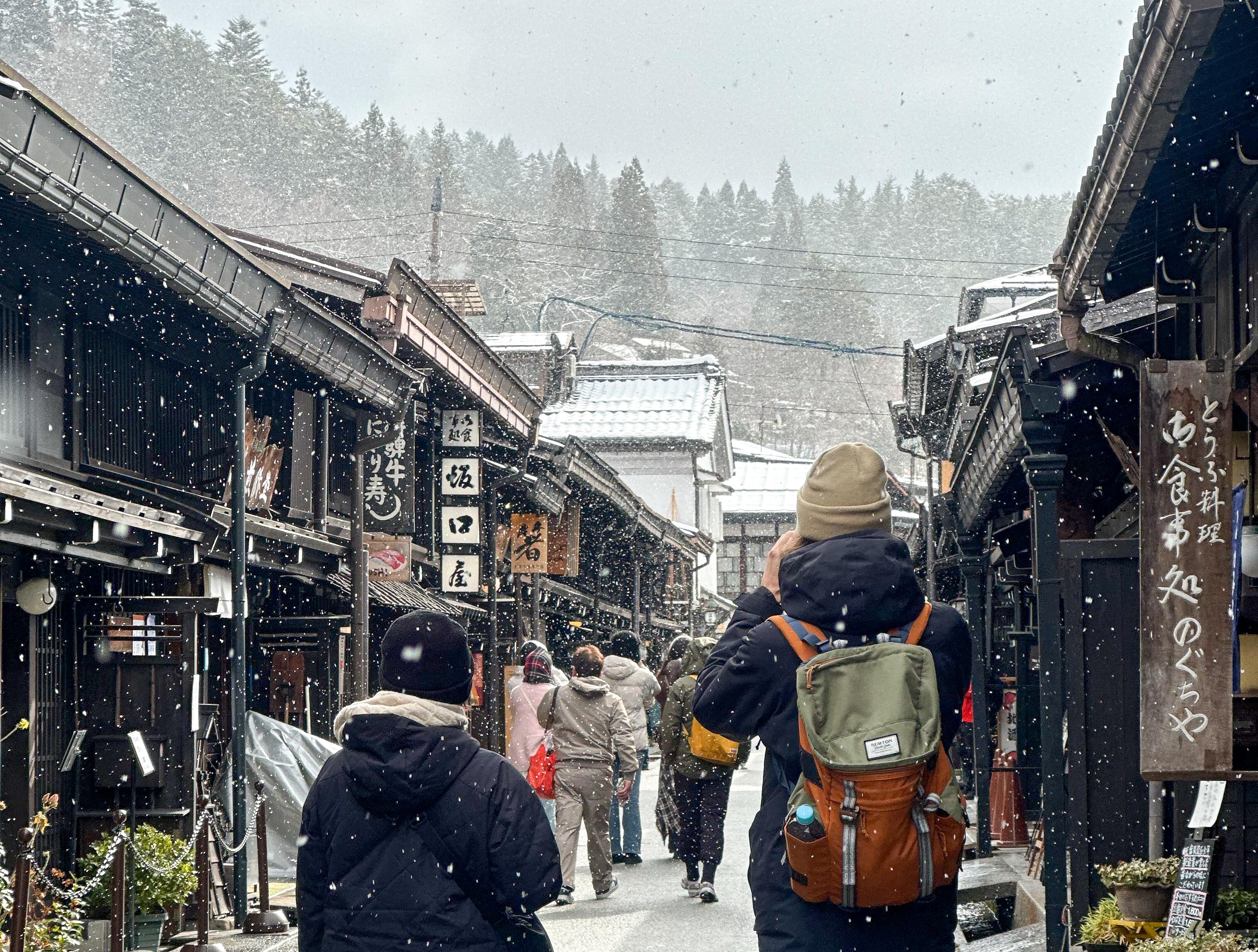
Most itineraries then carry you east to Takayama, where you cross the Miyagawa and walk the dark cedar shopfronts of Sanmachi Suji before the return leg. You reach Nagoya after dark, having covered roughly 300 kilometres.
All the details about your upcoming adventure in one place
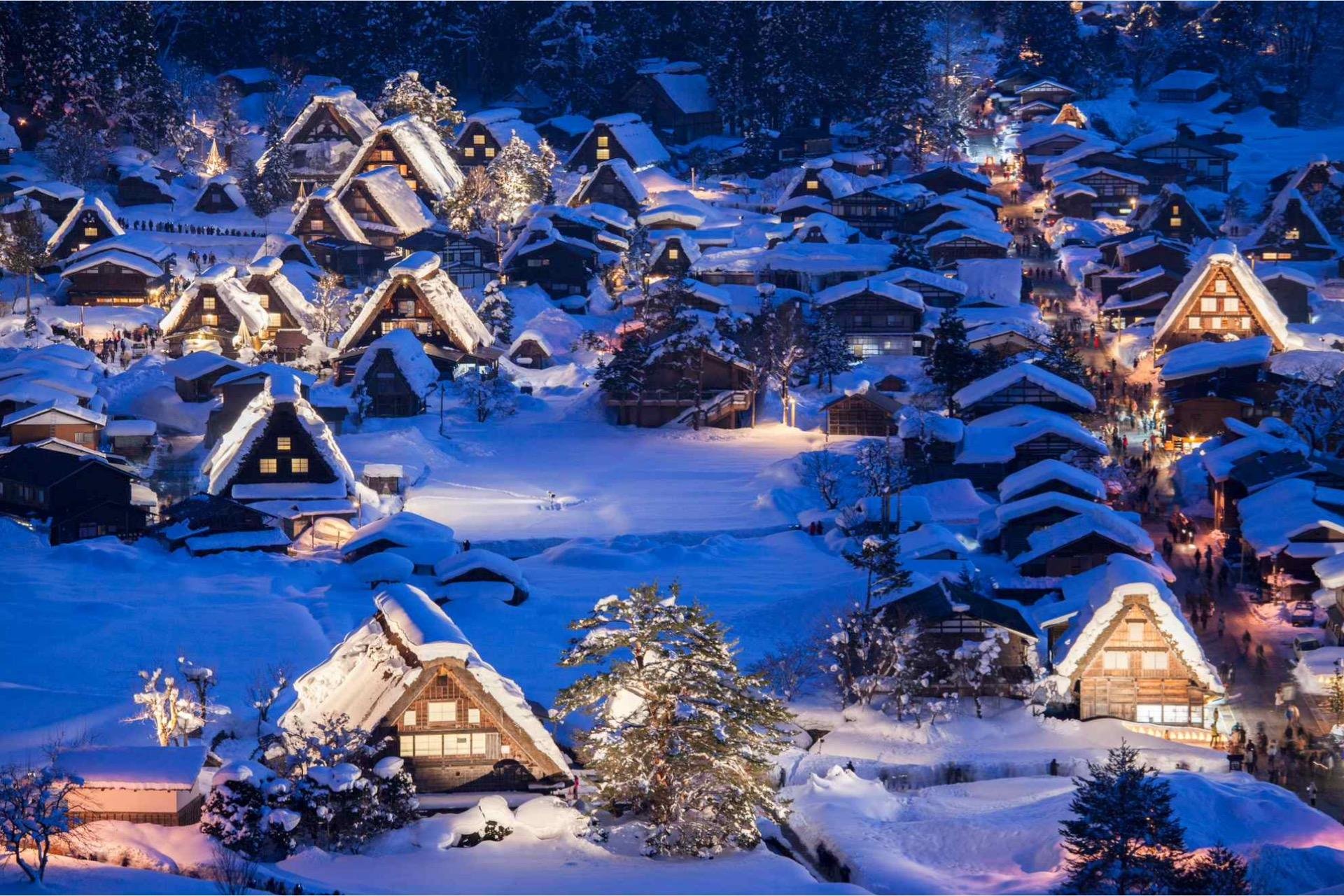
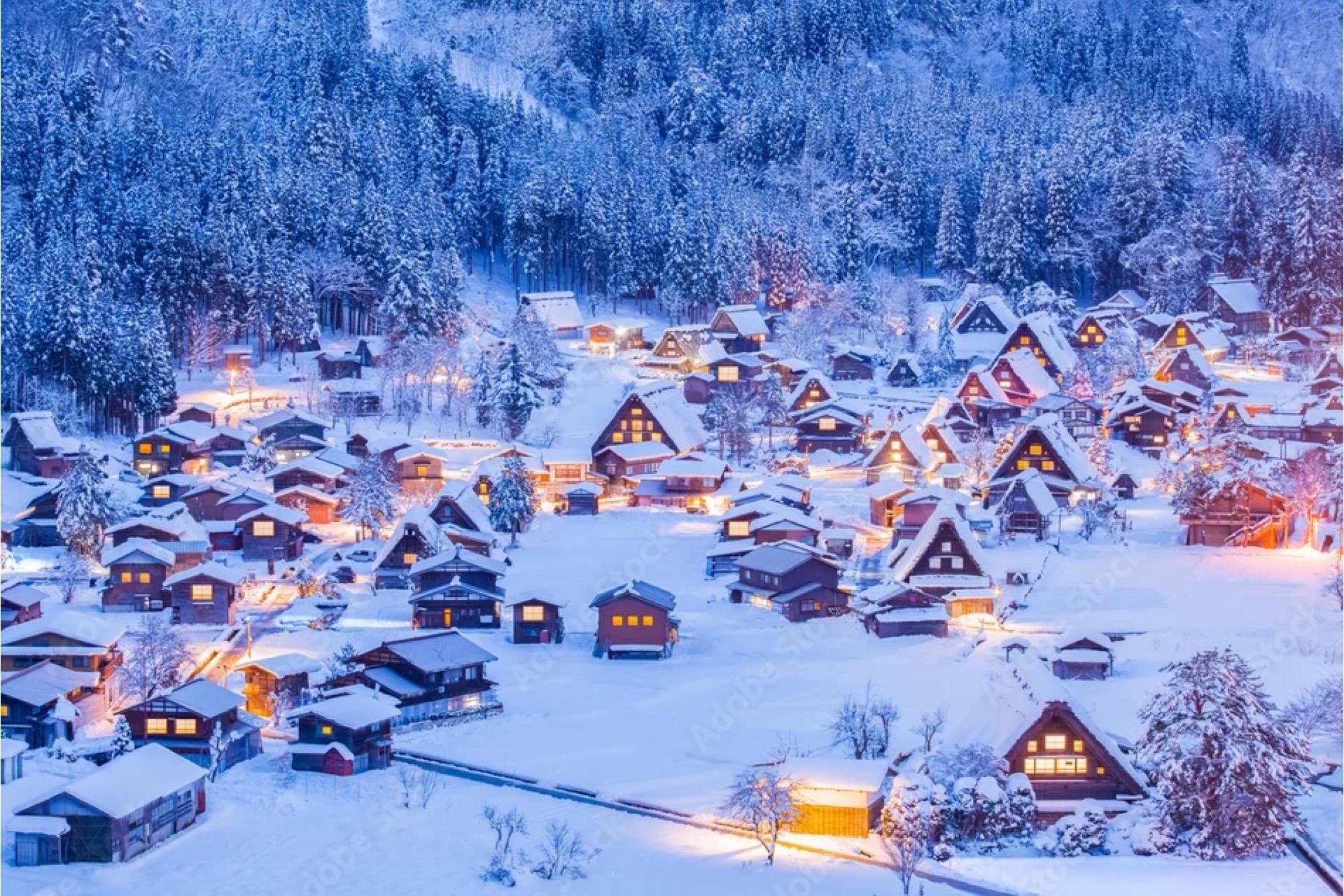
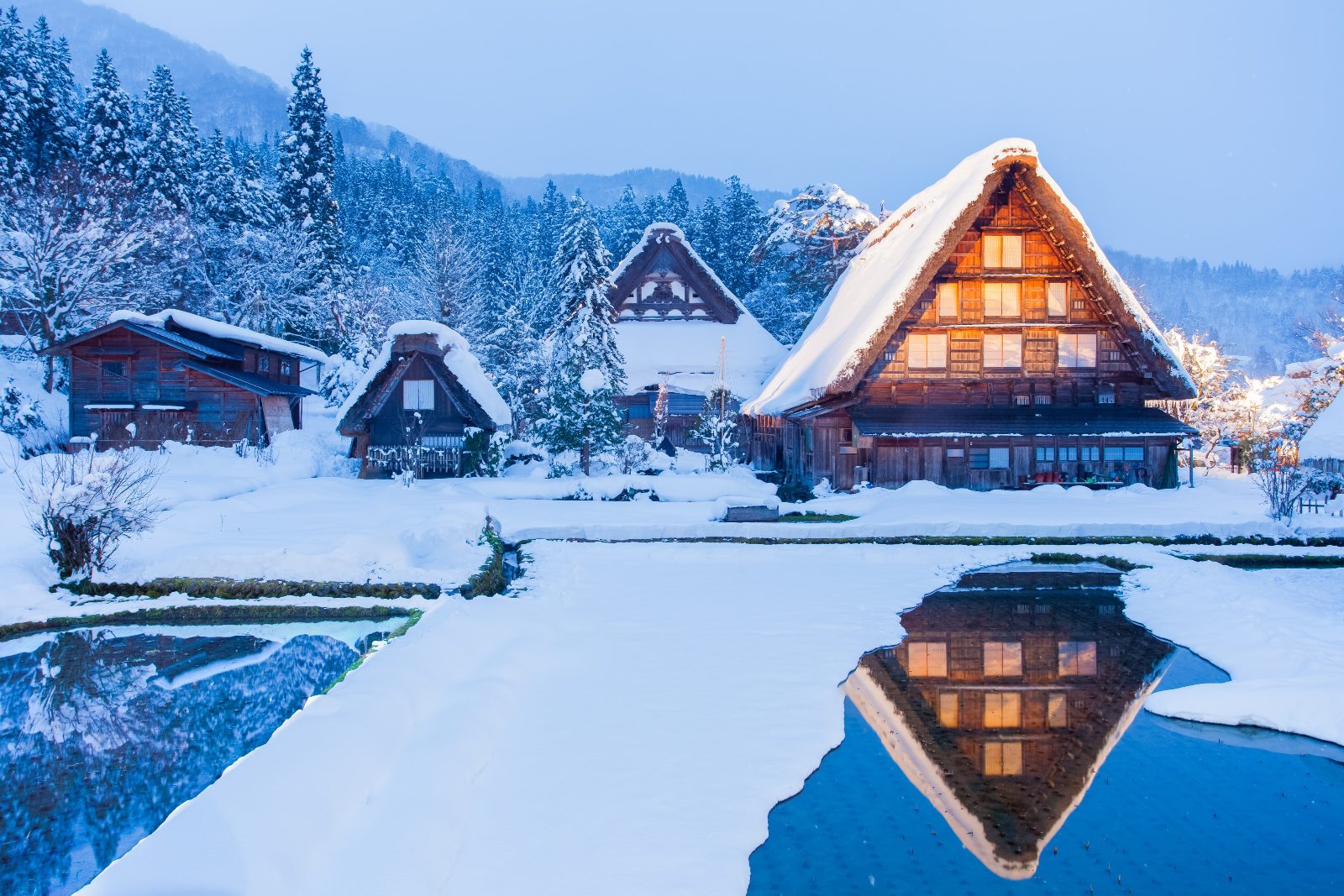
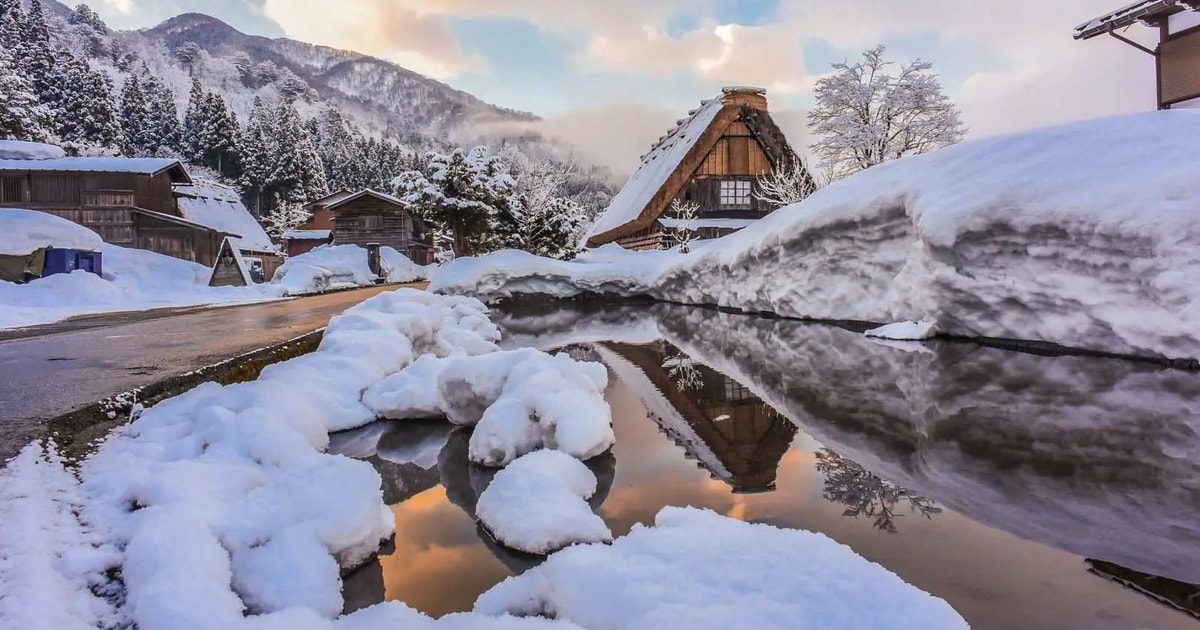
The steepest gassho-zukuri roofs in Ogimachi pitch at roughly sixty degrees — an angle calculated not for beauty but for shedding two metres of Shogawa valley snow. The name means "hands in prayer," and the comparison is literal.
Rafters meet at the ridge without a single nail, lashed instead with straw rope and hazel withe, a joinery method that allows the whole frame to flex in wind rather than snap.
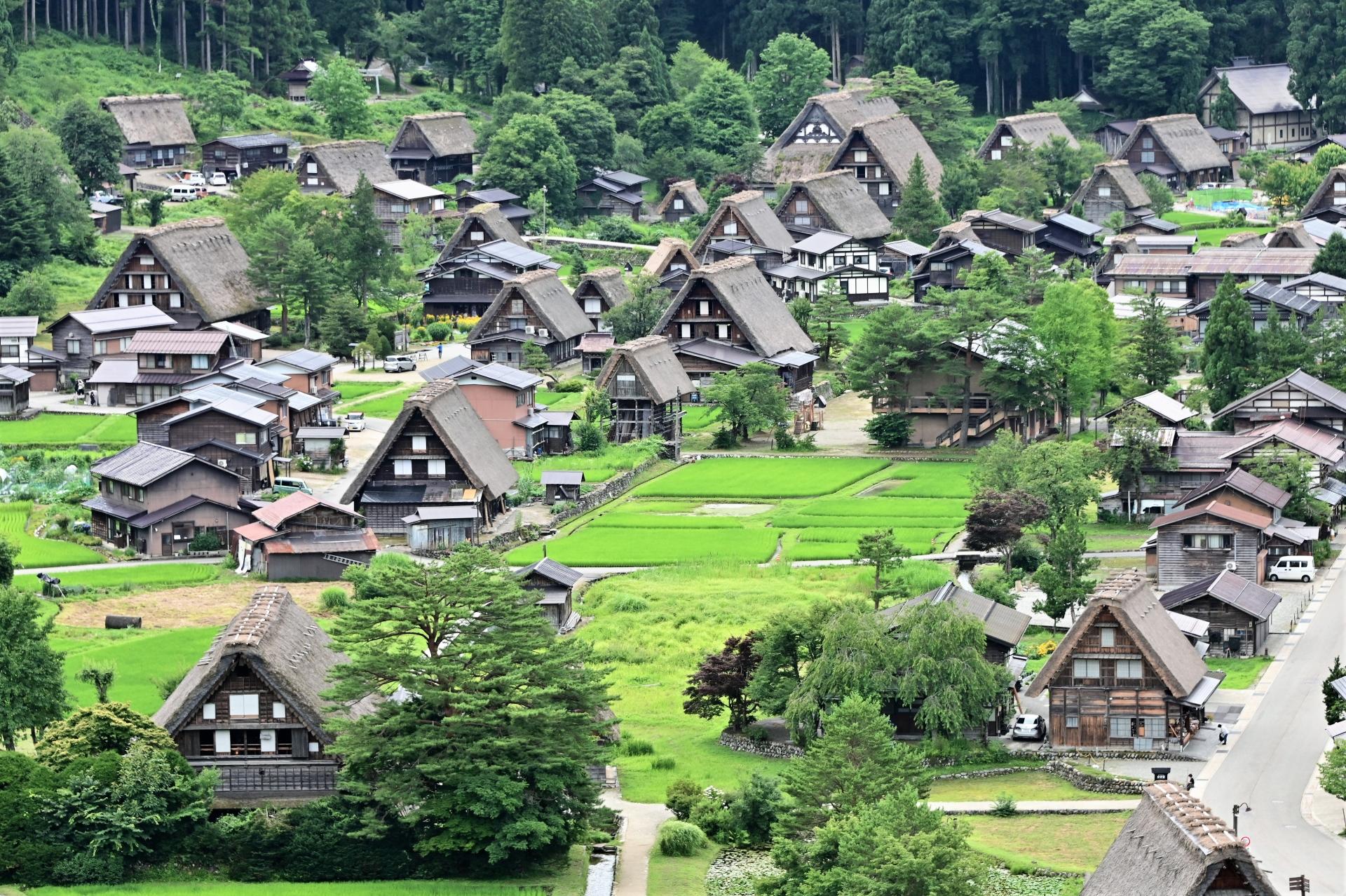
Ogimachi, together with Ainokura and Suganuma in neighbouring Toyama, entered the UNESCO World Heritage list in 1995 — three villages recognised as a surviving example of vernacular architecture adapted to extreme isolation. That isolation was economic as well as geographic. Upper floors, lit by gable windows and warmed by the irori hearth smoke rising from below, housed silkworm cultivation; the smoke itself cured the thatch against insects. Beneath the floorboards, villagers once produced saltpetre for gunpowder. A single farmhouse could shelter thirty people across several generations.
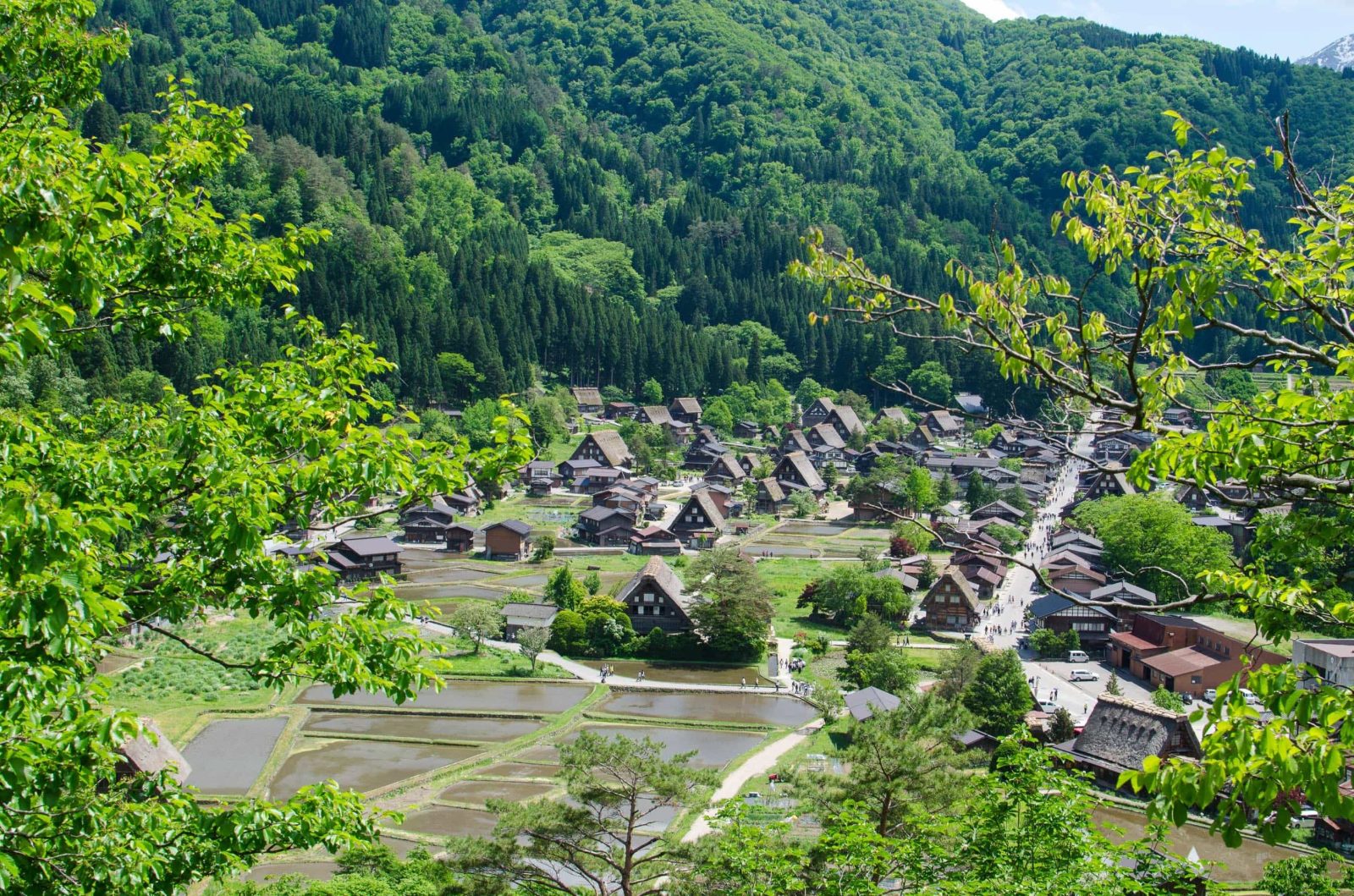
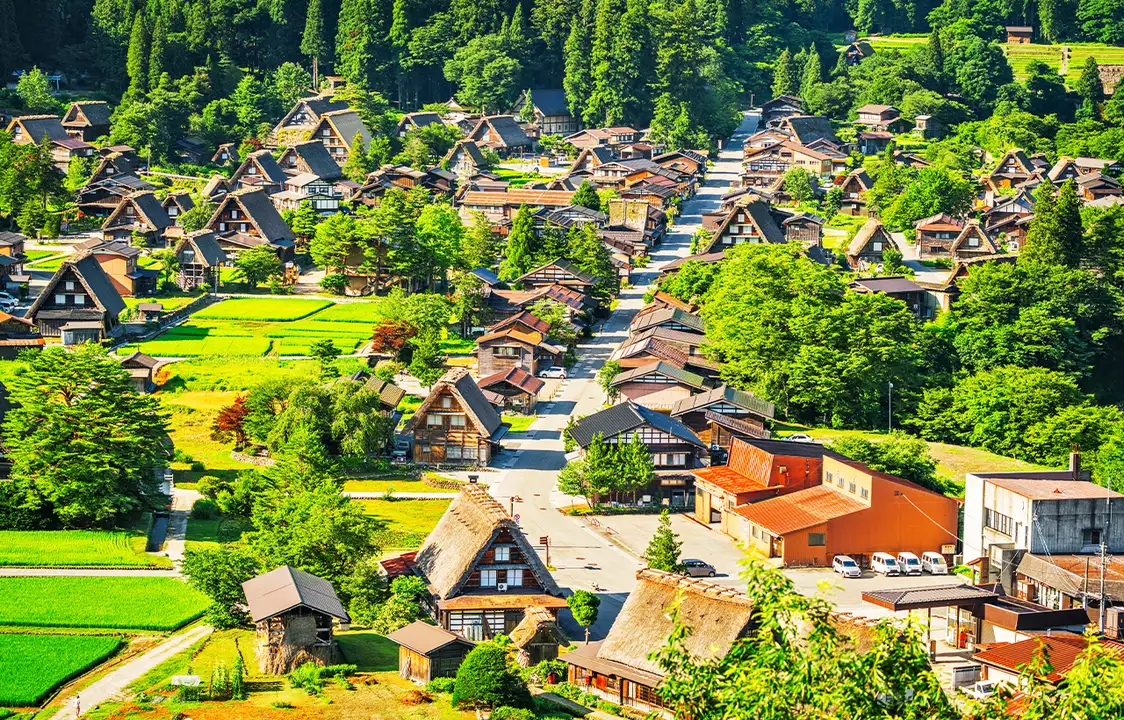
What gives the village its present weight is that it remains inhabited. Roughly 600 people live in Ogimachi, and around 110 gassho houses stand within the conservation zone — not a reconstructed park but a working settlement with a school, a post office and rice terraces worked each season. Rethatching a single roof consumes some 500 bundles of susuki grass and the labour of over 200 neighbours in a day, organised through the yui mutual-aid system that has outlasted the silk trade it once supported. The Wada House, the largest surviving residence, and the open-air Gassho-zukuri Minkaen preserve interiors that ordinary visitors may enter.
On value, the arithmetic is unusually clear. Entry to the village itself costs 0 JPY, with individual facilities charging 300-800 JPY; the real expense of any shirakawago private tour from nagoya is transport across the Hida mountains, not admission. Public buses run, but the Tokai-Hokuriku Expressway crossing consumes most of a day when combined with Takayama's old merchant quarter. The bookable inventory on this page reflects that trade-off honestly: a simple Shirakawa-go Bus Pass from Nagoya or Takayama for independent travellers, and full-day coach options — including a Gujo, Takayama and Shirakawa-go heritage itinerary — for those who would rather cede the driving. Choosing a shirakawago private tour from nagoya tour buys sequencing more than access, and in a valley open 08:00–17:00 daily, sequencing is what determines whether the thatch is seen in morning light or through a crowd.

Not a reconstructed park but a working settlement, where rethatching a single roof still summons two hundred neighbours.
Wear comfortable walking shoes suitable for gravel paths and sloped terrain. Layered clothing is recommended for the mountain climate of the shirakawago private tour from nagoya region.
Lockers are available at the Shirakawa-go Bus Terminal. Security patrols operate regularly to prevent fire risks within the historic gassho-style village.
Photography is permitted in outdoor areas, but avoid peering into private residences or gardens. Respect the privacy of local residents during your shirakawago private tour from nagoya.
The village is suitable for families, though visitors with young children should remain vigilant on narrow paths and near the Sho River.
The lower village is generally accessible, but many historic gassho-style houses have steep stairs and are not wheelchair-friendly. Plan accordingly for your Shirakawa-go and Takayama exploration.
Food and drink are available at various local cafes and restaurants in the village. Outside food should be disposed of in proper receptacles; do not litter in the UNESCO heritage zone.
Opening Hours
08:00–17:00
Address
1086 Ogimachi, Shirakawa-mura, Ono-gun, Gifu Prefecture, 501-5627, Japan
Accessibility
Lower village is manageable; viewpoints and farmhouse interiors are not fully step-free
Best Arrival Window
08:00–10:00 — Avoids heavy midday crowds and tour bus arrivals
Storage
Available at the bus terminal and main parking facilities
Navigation
Use 2495-3 Ogimachi for parking GPS; follow local signs for the Seseragi Parking Lot
For the shirakawago private tour from nagoya, cancellations without notice are charged at 100% of the guide fee. Cancellations on the day of the tour are charged at 80%, while cancellations the day before are charged at 20%.
Recommended time
2-3 hours
A shirakawago private tour from nagoya typically requires 2 to 3 hours to explore the UNESCO heritage village at a comfortable pace. Arriving during the best arrival window of 08:00–10:00 is essential to navigate the gassho-zukuri farmhouses before midday tour bus crowds peak. If you have booked a Shirakawa-go and Takayama tour that includes interior visits to local homes, consider adding an extra hour to your schedule. Visitors using shirakawago private tour from nagoya tours often find that early access minimizes wait times for shuttle buses and entry to historical sites. Those relying on shirakawago private tour from nagoya tickets for specific exhibitions should allow for variable queue lengths as the afternoon progresses.
Crowd levels through the day
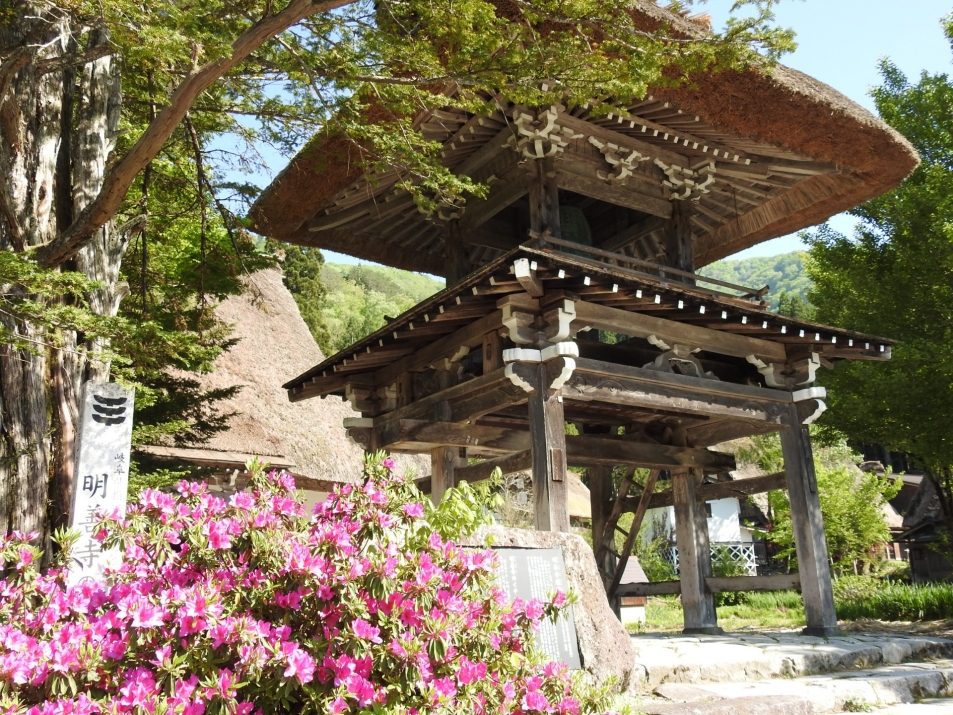
The gassho-zukuri houses of Ogimachi are engineering, not folklore. Their name means "hands joined in prayer," a reference to roof pitches near sixty degrees that shed the snow which buries the Shogawa valley each winter. Timbers are lashed with straw rope and hazel withes, never nailed, so the frame flexes under load. Thatch is miscanthus reed, laid a metre thick. The oldest surviving example, the Wada House in Ogimachi, dates to the late Edo period and remained a family residence until it opened to visitors. Anyone booking a shirakawago private tour from nagoya is entering a working village, not a reconstruction. The upper floors explain the shape. From the seventeenth century, households farmed silkworms in the attic storeys, where smoke from the hearth below cured the thatch and deterred insects. Nitrate-rich earth from beneath the floorboards was refined into saltpetre for gunpowder, a trade the Kanamori clan and later the Tokugawa shogunate taxed closely. Large roofs meant large households; extended families of thirty were recorded, and inheritance customs kept them undivided. Survival was never assured. Silk collapsed after 1930, and the Miboro Dam, completed in 1961, drowned villages downstream; families sold their houses or moved them. Ogimachi residents responded in 1971 with a charter refusing to sell, rent or destroy any building. That document, more than any statute, is why Shirakawa-go still stands. The communal labour system called yui survives with it: roughly every thirty to forty years, several hundred neighbours re-thatch a single roof in a day, without payment. Guests on a Shirakawa-go and Takayama tour occasionally witness one. UNESCO inscribed Ogimachi, Ainokura and Suganuma in December 1995. A shirakawago private tour from nagoya now reaches the valley in roughly two and a half hours by expressway. What a well-chosen shirakawago private tour from nagoya tour preserves is context: the Doburoku festival, the Myozenji temple's thatched bell tower, the terraced paddies. Compare shirakawago private tour from nagoya tours and check shirakawago private tour from nagoya tickets against the live grid above for current durations and prices.
Attic silkworm cultivation and saltpetre refining shape the tall multi-storey gassho frame.
The Wada House is built in Ogimachi, still the village's largest surviving gassho-zukuri residence.
Collapse of the domestic silk market removes the economic reason for the large attic floors.
Completion of the Miboro Dam floods valley settlements and scatters dozens of gassho households.
Ogimachi residents adopt a charter refusing to sell, rent or demolish any village building.
The Japanese government designates Ogimachi an Important Preservation District for Historic Buildings.
UNESCO inscribes Ogimachi, Ainokura and Suganuma as a World Heritage Site.
Yui communal re-thatching continues, with neighbours renewing individual roofs in a single day.
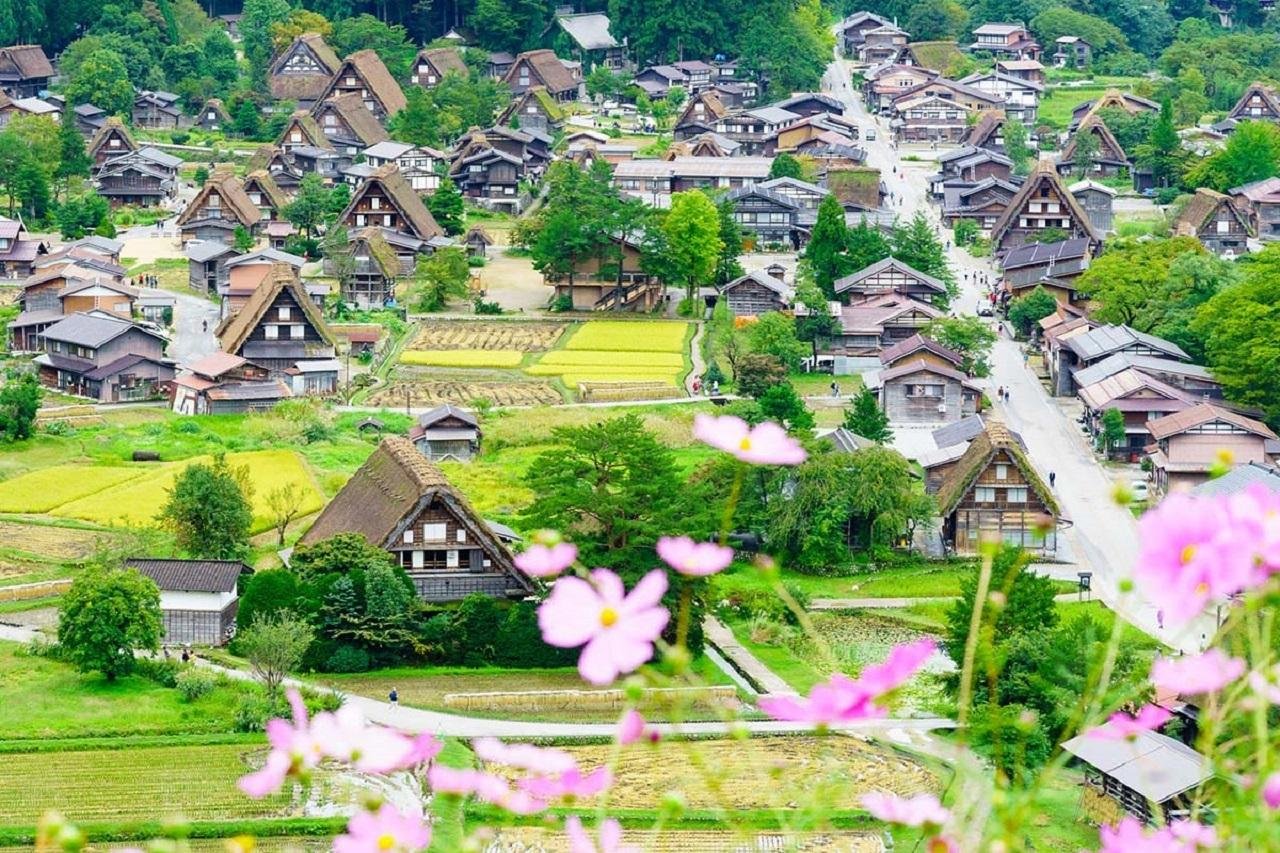
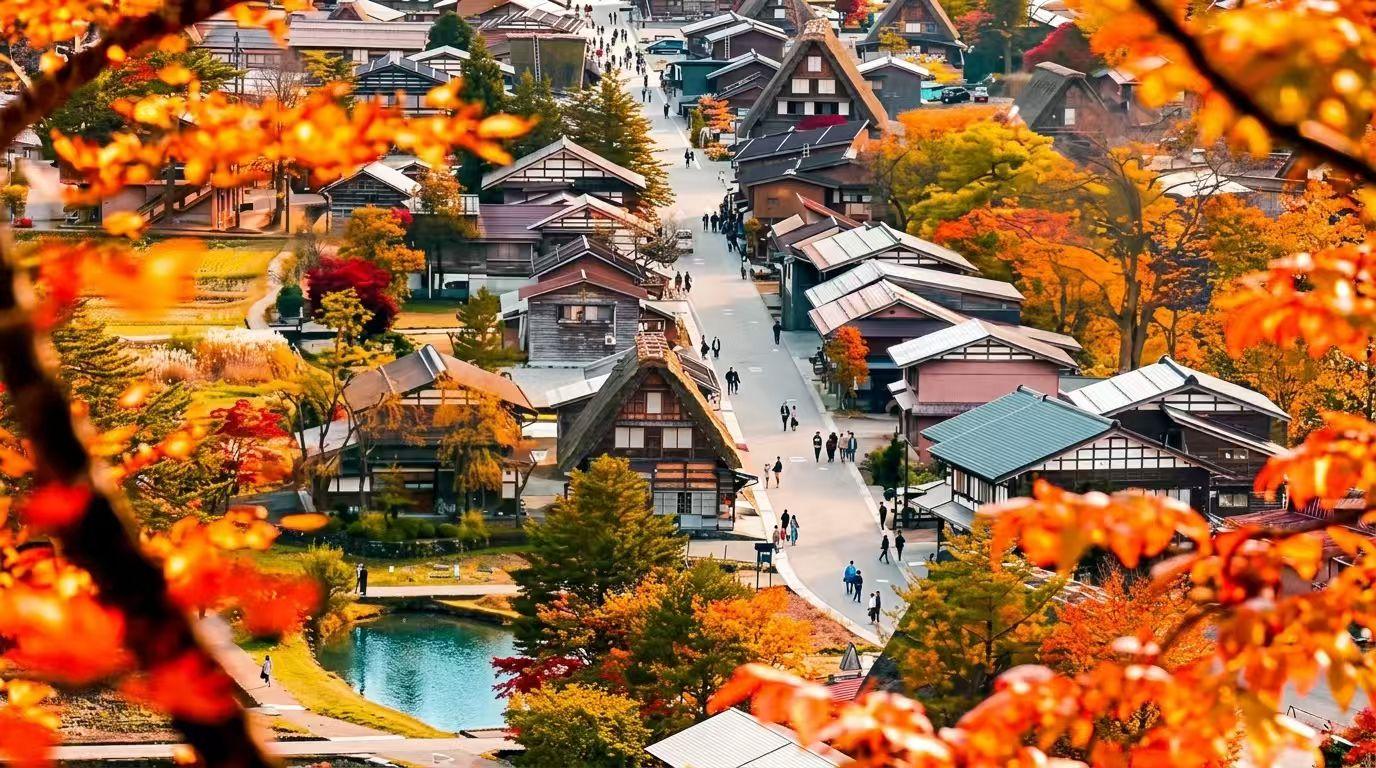
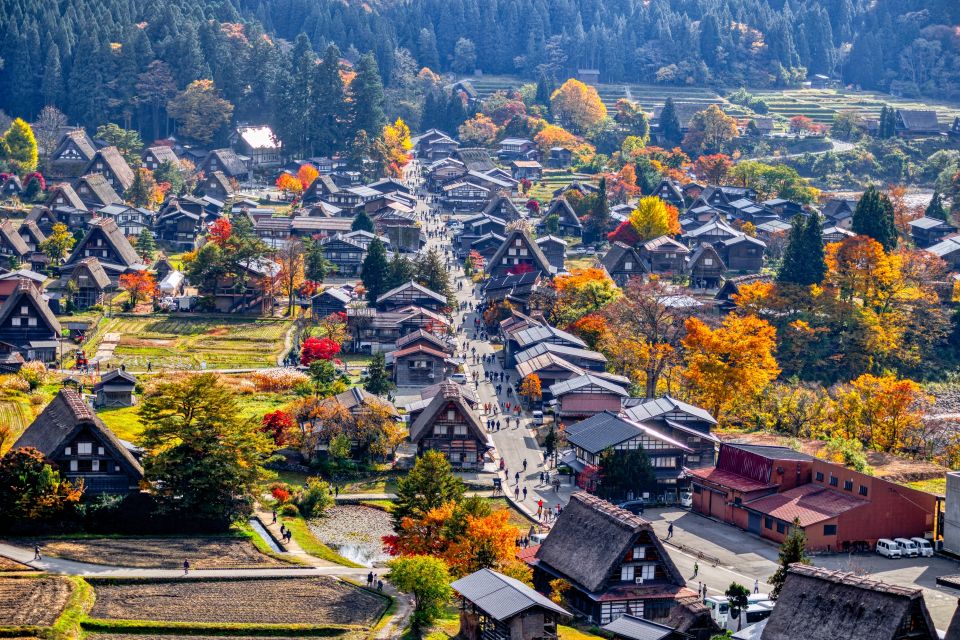
This elevated position offers the classic overlook of the gassho-zukuri farmhouses nestled in the valley, serving as the highlight of any shirakawago private tour from nagoya.
Located at the village entrance, this suspension bridge provides a distinct angle looking back toward the thatched-roof structures, ideal for those booking shirakawago private tour from nagoya tours.
Capture the towering pagoda and traditional architecture of this historic site; it is a popular inclusion for guests on a shirakawago private tour from nagoya tour.
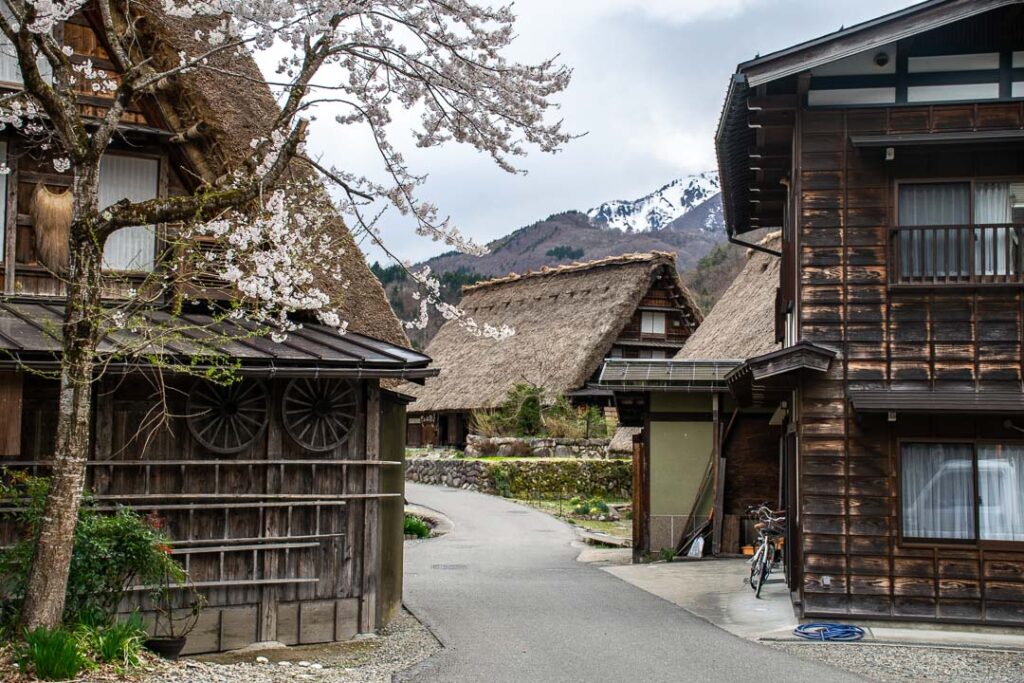
Walk the central path to frame the interplay of traditional timber facades and seasonal foliage, a frequent request for those with shirakawago private tour from nagoya tickets.
Planning a shirakawago private tour from nagoya allows families to navigate the historic Gifu Prefecture landscape at a comfortable pace. This UNESCO heritage site offers children a chance to explore traditional gassho-zukuri farmhouses while enjoying the mountain air.
The village paths are largely gravel and stone, making lightweight strollers challenging; a baby carrier is recommended for exploring these landmarks.
Children aged six and older typically enjoy the interactive exhibits, while younger toddlers appreciate the open space surrounding the village houses.
Public restrooms are available, though baby-change facilities are limited, so ensure you have necessary supplies before departing for your shirakawago private tour from nagoya tours.
The best arrival window is 08:00–10:00 to avoid heavy midday crowds and tour bus arrivals, providing a quieter experience for younger travelers.
While most of the village is outdoors, several farmhouses offer indoor displays where families can seek shelter if the weather turns during your shirakawago private tour from nagoya tour.
Visitors on a shirakawago private tour from nagoya will find several traditional eateries serving regional specialties within the village. These establishments offer a convenient way to enjoy local flavors while exploring the UNESCO heritage site.
Located in a historic farmhouse, this spot serves grilled Hida beef and local mountain vegetables. It is a popular choice for those booking shirakawago private tour from nagoya tours.;Soba Dojo Basho
Everything you need to know for your journey
The village is open from 08:00–17:00 daily.
Entrance to the village is 0 JPY, though individual facilities charge 300-800 JPY.
Portions of the village are accessible, but historic interiors have steep stairs and limited mobility access.
The best arrival window is 08:00–10:00 to avoid heavy midday crowds and tour buses.
Yes, but lockers are recommended for convenience while exploring the gassho-style houses.
Photography is welcome in public areas, but please respect the privacy of local residents' homes.
Wear comfortable walking shoes and weather-appropriate clothing for the Hida region.
Yes, food is available at local shops and cafes throughout the historic area.
Regular express buses run from the Takayama Bus Center to the Shirakawa-go Bus Terminal in about 50 minutes.
Join thousands of happy travelers who have discovered this incredible experience
Book Your Experience Now